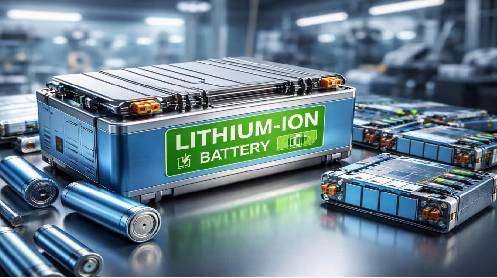
ISLAMABAD: In a major step toward strengthening Pakistan’s clean energy and advanced manufacturing sectors, Pakistani industrial conglomerate Saigol Group and China’s Juhang Energy Technology Group have signed a Memorandum of Understanding (MoU) to establish local manufacturing of lithium-ion batteries in Pakistan.
The agreement, announced on Sunday, is expected to reduce Pakistan’s reliance on imported energy storage systems while supporting the country’s transition toward renewable energy.
Speaking at the signing ceremony, Prime Minister’s Adviser on Industries and Production Haroon Akhtar Khan described the partnership as another milestone in the growing economic and industrial cooperation between Pakistan and China.
“The agreement focuses on the local production of lithium-ion batteries, marking a significant step in the development of Pakistan’s emerging advanced manufacturing and clean energy sector,” he said.
Although the location of the proposed manufacturing facility has not yet been disclosed, Khan said local battery production would reduce import dependence, create employment opportunities, and strengthen Pakistan’s industrial self-reliance.
He noted that domestic manufacturing of lithium-ion batteries is becoming increasingly important as Pakistan rapidly expands its solar and other renewable energy capacity, which requires efficient and reliable energy storage solutions.
Lithium-ion batteries are widely used in electric vehicles, mobile phones, wearable devices, and renewable energy storage systems due to their high energy density and lower environmental impact compared to fossil fuel-based technologies.
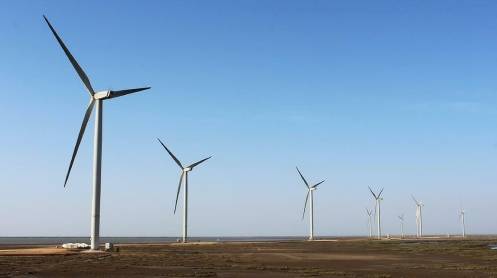
Pakistan has significantly accelerated its shift toward clean energy in recent years, with solar power’s share in the national energy mix rising from around 4% in 2021 to an estimated 14–25% during 2024-25, according to official figures.
Haroon Akhtar Khan said battery manufacturing represents a strategic industry for the future and reflects Pakistan’s commitment to benefiting from global technological advancements through industrial partnerships and innovation.
He reiterated the government’s commitment to facilitating investors, promoting industrial growth, and creating an enabling environment for high-tech manufacturing as part of its long-term economic strategy.
The agreement follows a series of initiatives aimed at developing Pakistan’s domestic battery manufacturing industry. Last month, Chinese company Dongjin Group announced plans to establish a dry battery manufacturing plant in Faisalabad to help meet the country’s growing demand for batteries driven by the rapid adoption of electric vehicles and solar energy systems.
Industry experts believe these investments will play a vital role in supporting Pakistan’s clean energy transition, enhancing energy security, and building a competitive local manufacturing ecosystem for advanced energy storage technologies.